
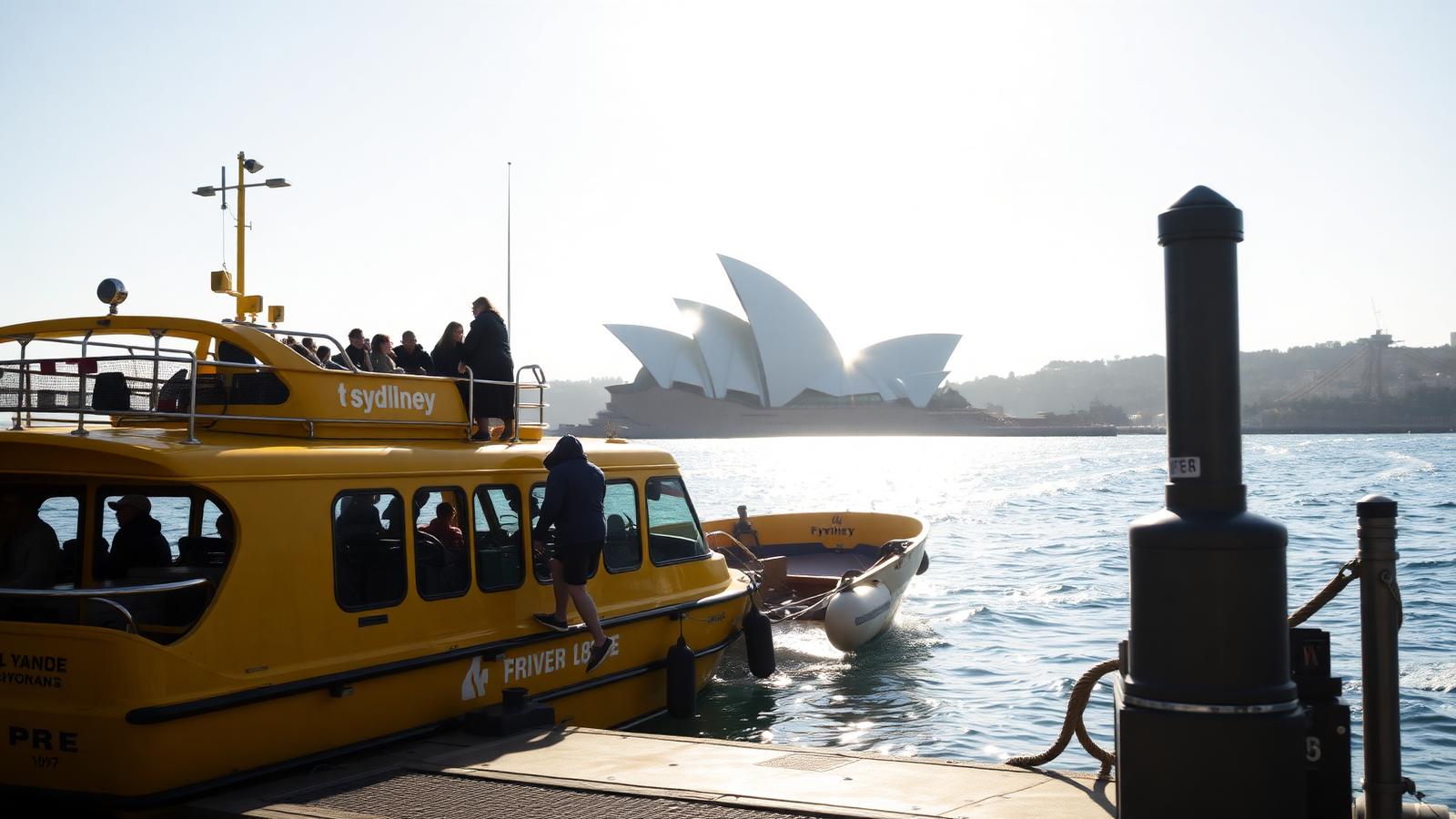
If you have ever stood at Circular Quay watching a small yellow boat pull straight up to a pontoon, load six people and their luggage and disappear towards Rose Bay in under a minute, you have already seen the answer to the question. But "what is a water taxi?" deserves a proper explanation, because in Australia it means something quite specific — and it is not the same thing as a ferry, a cruise, or a charter boat.
This guide covers exactly what a water taxi is, how the service works in Sydney, the Gold Coast, Pittwater and the Whitsundays, what it costs, who uses them, and when a water taxi is the right call versus every other way of crossing water.
What is a water taxi, exactly?
A water taxi is a small, licensed commercial passenger vessel that you hire privately and on demand to travel directly between two points on the water. Think of it as a taxi or rideshare that happens to float. You choose the pickup wharf, you choose the drop-off wharf, you choose the time, and the boat is yours for that trip.
Three things define a water taxi and separate it from everything else on the harbour:
- On demand. There is no timetable. You book it for the moment you need it, often within the hour.
- Point to point. It goes where you ask, including private jetties, restaurant pontoons, marinas, island wharves and yacht moorings — not just the public ferry stops.
- Private. The boat carries your group and nobody else. You are not sharing the cabin with strangers.
In Australia every water taxi must be operated by a licensed commercial operator with a survey-rated vessel, a qualified master (skipper) holding the relevant Coxswain or Master certificate, and public liability insurance. That is the legal difference between a water taxi and a mate with a runabout.
How do water taxis work?
The modern process is almost entirely digital. On Water Taxis Australia it runs like this:
- Enter your pickup and drop-off. Type a wharf name — Circular Quay, Watsons Bay Wharf, Rose Bay Wharf, Manly Wharf — or drop a pin on a private jetty or a hotel pontoon.
- Choose date, time and passengers. Service hours are 6:00am to 10:00pm. Anything after 9:00pm same-day or for the following day goes through Book Later so an operator can confirm a boat properly.
- See the all-inclusive fare. The fare shown covers the boat, the licensed master, fuel, GST, insurance and platform fees. There is nothing to pay on the wharf.
- The job is broadcast to operators. Every licensed operator covering that stretch of water gets the job at the same instant by SMS and app alert. The first to accept is assigned.
- You get a boarding pass. A confirmation lands by email and SMS with a QR ticket, the vessel name, the skipper's mobile and a live map of the pickup point. The skipper scans your QR code at the wharf.
Because the job is offered to the whole operator pool rather than a single company, you are not stuck waiting on one business's fleet being free. That is the single biggest change in how water taxis work in Australia in the last few years.
What does a water taxi cost in Australia?
Water taxis are priced per boat, not per person — this is the detail most first-timers get wrong, and it is the reason groups love them.
Indicative 2026 Sydney Harbour fares for up to 12 passengers:
- Circular Quay to Darling Harbour — from $120
- Circular Quay to Watsons Bay — around $220
- Circular Quay to Manly — around $290
- Rose Bay to Darling Point — from $120
Surcharges that can apply: a flat after-hours fee for pickups between 10:00pm and 6:00am, a flat NSW public holiday fee, and waiting time after a 15-minute grace period. All of it is shown before you pay — no surprise invoices.
Split across a group, the maths is straightforward. A $290 Manly run is $290 for one person, or about $24 each for twelve. Our full water taxi cost guide for Australia breaks down every route and surcharge.
Who actually uses water taxis?
The passenger mix is broader than most people assume:
- Commuters and business travellers heading from the CBD to a meeting in Rose Bay, Balmain or North Sydney without touching a road.
- Cruise passengers transferring between the Overseas Passenger Terminal, White Bay and their hotel with luggage.
- Wedding parties moving a bride, a bridal party or 100 guests to a waterfront venue on a strict schedule.
- Restaurant and event guests arriving at a harbourside venue's own pontoon.
- Island and waterfront residents on Scotland Island, Dangar Island, the Pittwater offshore communities and the Whitsundays, where a boat is the only road.
- Tourists who want the Opera House and Harbour Bridge from water level without booking a two-hour cruise.
Water taxi vs ferry vs charter boat
A ferry is public transport: fixed route, fixed timetable, per-person ticket, shared with everybody else. Brilliant value, terrible if your flight lands at 5:40pm and the last service to your wharf left at 5:20pm.
A charter boat is hired by the hour for an experience rather than a transfer — a birthday, a corporate event, a sunset cruise with catering. Minimum hire is usually three to four hours.
A water taxi sits between them: private like a charter, but priced and used like a transfer. If you want the full comparison, read water taxi vs water limousine vs charter boat.
Where do water taxis operate in Australia?
Water Taxis Australia dispatches across:
- Sydney Harbour and the Parramatta River — the largest operator pool in the country.
- Pittwater and the Northern Beaches — Palm Beach, Scotland Island, the offshore communities, Central Coast connections.
- The Gold Coast and Broadwater — Marina Mirage, Sanctuary Cove, Wavebreak Island, Sea World.
- The Whitsundays — Airlie Beach, Hamilton Island, Hayman, Daydream and Whitehaven Beach.
- Melbourne, Brisbane, Perth, Adelaide and Hobart — growing operator coverage on the Yarra, Brisbane River, Swan River and Derwent.
What to expect on board
Most Sydney water taxis are 6 to 12 seat enclosed or half-cabin vessels with an open rear deck, grab rails, life jackets for every passenger, and space for luggage, surfboards, prams, eskies and golf bags. Larger vessels and water limousines are available for groups above 12 or for anyone who wants leather seating, a fridge and champagne on ice.
You board from a pontoon or wharf steps. The skipper handles bags and hands. Passengers with limited mobility should note it in the booking so the operator sends a vessel with a low, stable boarding platform and berths at a flat pontoon.
Practical tips before you book
- Arrive 15 minutes early. Wharves get busy and the grace period runs from your booked time.
- Name the wharf, not the suburb. "Rose Bay Wharf" gets a precise berth; "Rose Bay" makes the skipper guess.
- Book ahead for events. NYE, Vivid, sailing regattas and long weekends sell out the local fleet days in advance.
- Give a real mobile number. The skipper calls or texts you on approach.
- Check the weather policy. If a service is cancelled for safety, you are refunded — the operator will not run an unsafe crossing.
The short answer
A water taxi is a private, licensed, on-demand boat that takes your group directly from one point on the water to another, for one flat per-boat fare, at a time you choose. In a city built around a harbour, it is often the fastest and least stressful way to travel — and it is now as simple to book as a rideshare.
Get an instant fare for your pickup and drop-off and see what the trip actually costs.
Questions we hear a lot
What is a water taxi?+
A water taxi is a small, licensed passenger vessel you hire privately, on demand, to take you directly from one wharf, pontoon or jetty to another. Unlike a ferry it has no timetable and no other passengers — you book it, it comes to you, and it goes where you ask.
How do water taxis work in Australia?+
You enter your pickup and drop-off point, date, time and passenger count online. The job is broadcast to licensed commercial operators covering that stretch of water; the first operator to accept is assigned, and you get a confirmation with a QR boarding pass by email and SMS.
Are water taxis expensive?+
They are priced per boat, not per person. A short Sydney Harbour hop starts around $120 per boat and most CBD-to-inner-harbour runs sit between $120 and $290 for up to 12 passengers, so with four or more people the per-head cost is comparable to a rideshare.
Do water taxis run at night?+
Standard service hours are 6:00am to 10:00pm. After-hours pickups are available on request with a flat after-hours surcharge; late-night and next-day trips are booked through Book Later rather than instant dispatch.
Is a water taxi the same as a ferry?+
No. A ferry runs a fixed route to a public timetable with other passengers and per-person tickets. A water taxi is a private hire — your group only, your schedule, your pickup point, one flat fare for the boat.
Ready to lock in your trip on the water?
Live fare, instant confirmation, one clean receipt. If the operator can't cover your slot we issue an automatic full refund — no phone calls, no forms.
More guides you'll like
How Do You Book a Water Taxi? A Step-by-Step Guide for Australia
How to book a water taxi in Sydney and across Australia — what information you need, how far ahead to book, what happens after you pay, and how to get a boat at short notice.
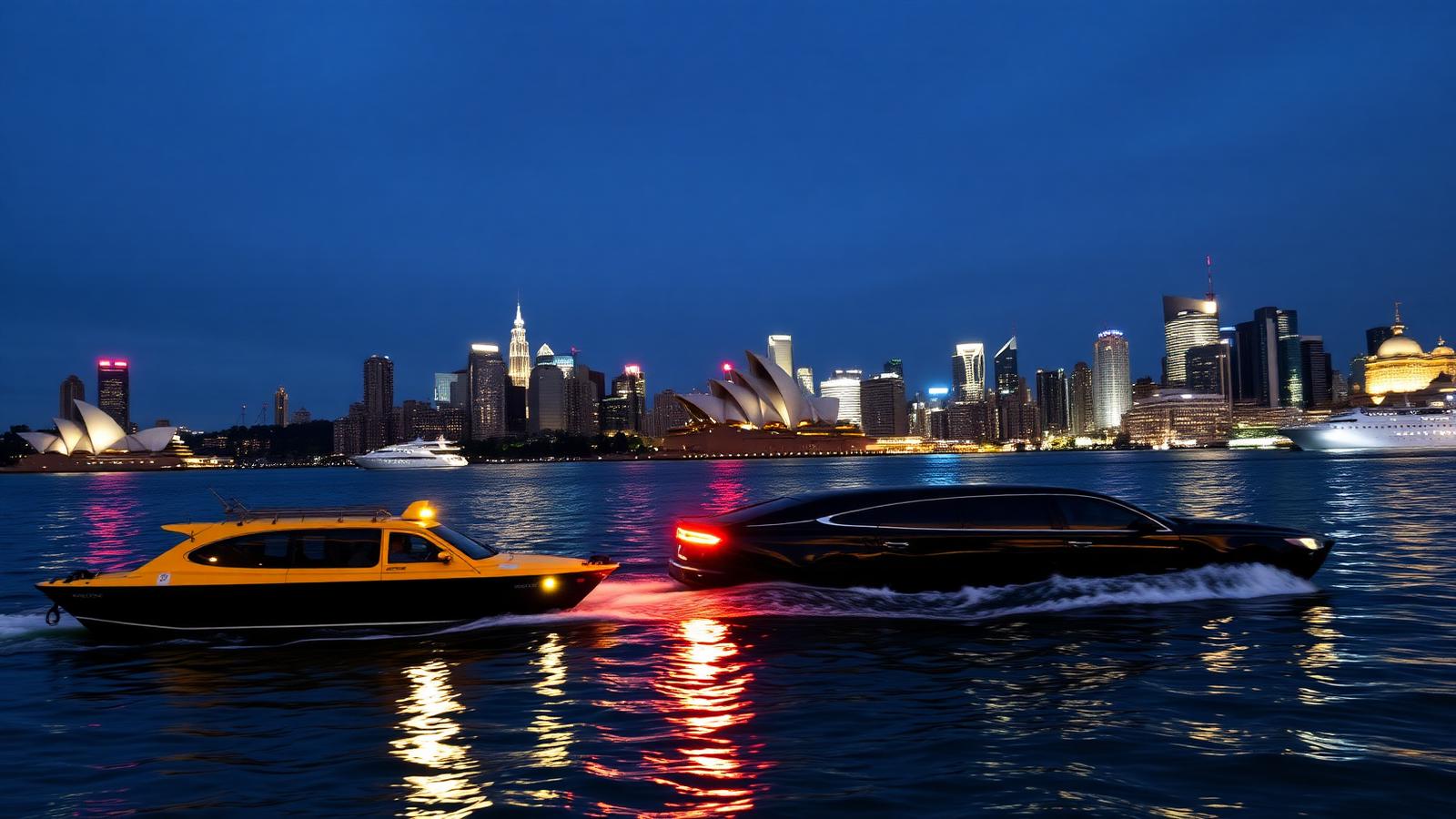
Water Taxi vs Water Limousine vs Charter Boat: What's the Difference?
The difference between a water taxi, a water limousine and a charter boat in Australia — how each is priced, how long you get the boat for, and which one you should actually book.
How Much Does a Water Taxi Cost in Australia? The 2026 Price Guide
A clear, region-by-region breakdown of what water taxis cost in Australia in 2026 — Sydney Harbour, the Gold Coast, the Whitsundays, Hawkesbury, Lake Macquarie and Cairns — plus how fares are calculated and how to keep the bill down.